
A Proven Non-drug Treatment
Many Benefits of TMS Therapy
- FDA Cleared
- Non-drug
- Non-invasive
- No side effects of drugs
- Not ECT
- Long Lasting Relief
- Covered by Insurance
- Proven to work
TMS therapy is a non-invasive, FDA-cleared treatment for depression. Magnetic energy similar to what is used in an (MRI) is used to stimulate the areas of the brain that are sluggish and causing depressed mood.
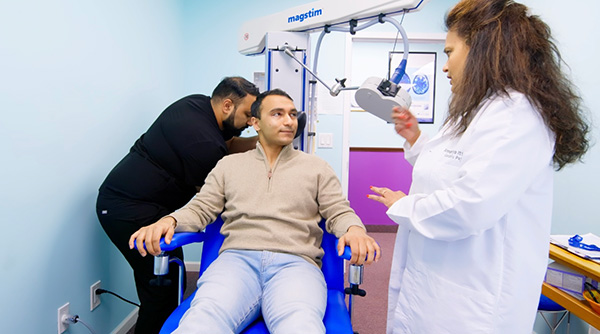
Clinical trials have demonstrated the safety and effectiveness of Magstim® TMS Therapy in treating patients who have not benefited from prior antidepressant medication. Magstim TMS Therapy was studied in adult patients suffering from Major Depressive Disorder, all of whom had not received satisfactory improvement with previous treatments.
TMS stands for transcranial magnetic stimulation. It is used to treat depression by stimulating the brain non-invasively using electromagnetic fields, similar to those produced by an MRI machine. During TMS Therapy, a magnetic field is administered in very short pulses to the part of the brain that research has demonstrated to be associated with depression. The typical initial course of treatment is about 19-37 minutes daily over 4-6 weeks.
The Magstim TMS Therapy system uses short pulses of magnetic fields to stimulate the area of the brain that is thought to function abnormally in patients with depression. The magnetic field produces an electric current in the brain that stimulates the brain cells (neurons). This results in changes that are thought to be beneficial in the treatment of depression.
It usually takes time for healthcare insurers to establish coverage policies for newly approved treatments such as Magstim TMS. However, many commercial and Medicare plans have recognized the effectiveness of treating depression with TMS Therapy and now cover TMS as part of their plans.
Magstim® is non-systemic (does not circulate in the blood throughout the body), so it does not have side effects such as weight gain, sexual dysfunction, nausea, dry mouth, sedation, etc. The most common side effects reported during clinical trials were headache and scalp discomfort – generally mild to moderate – occurring less frequently after the first week of treatment.
No. TMS Therapy involves a unique method of using pulsed magnetic fields for therapeutic benefit. The intensity of the magnetic field is similar to that of the magnetic fields used in magnetic resonance imaging, or MRI. These techniques differ radically from the popular use of low intensity, static magnetic fields. These products deliver weak and undirected static fields that are not capable of activating brain cells.
Each TMS therapy session typically lasts about 19 to 37 minutes, depending on your treatment protocol. A full course usually involves five sessions per week over four to six weeks. You remain awake and alert throughout, and most patients return to normal activities — including work and driving — immediately afterward, since there is no sedation or recovery time required.
TMS therapy is well tolerated and non-systemic, so it avoids the common side effects of antidepressant medications, such as weight gain, nausea, or sexual dysfunction. The most common side effect is mild scalp discomfort or a tapping sensation at the treatment site during sessions, which usually eases within the first week. Serious side effects are rare. Your provider at Hillside TMS will review your health history to confirm TMS therapy is appropriate for you.
Every patient responds differently, but many people begin to notice improvements in mood, sleep, and energy within two to four weeks of starting TMS therapy. Because a full course runs four to six weeks, the most meaningful changes are often felt toward the later weeks of treatment and can continue after the course is complete. Our team monitors your progress at each visit and adjusts your care as needed.
